 |
Peano
|
|
Peano
|
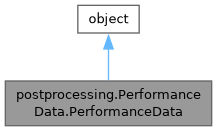
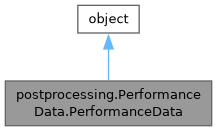
Public Member Functions | |
| __init__ (self, file_name, solver_name="", verbose=False) | |
| :: Attributes | |
| __str__ (self, *args, **kwargs) | |
| parse (self, verbose) | |
| get_time_per_time_step (self) | |
| Returns a whole array of times per time step, so you can plot the evoluation of the cost per step over time. | |
| get_average_time_per_time_step (self) | |
| Returns a whole array of times per time step, so you can plot the evoluation of the cost per step over time. | |
| get_updates (self) | |
| get_time_step_real_time_stamps (self) | |
| Returns a series of real time stamps (in seconds) snapshotted per time step. | |
| get_time_step_simulated_time_stamps (self) | |
| Returns a sequence of time stamps that are the simulated time stamps (where has the simulation been at a certain point) per step. | |
| get_time_step_time_step_size (self) | |
| uses_local_timestepping (self) | |
| timesteps (self) | |
| Should maybe eliminate the time steps that are not really steps. | |
| time_per_time_step (self) | |
| Time of last time step normalised (multiplied) with h^d. | |
| remove_first_n_entries (self, count) | |
| Remove the first count entries from the dataset. | |
Data Fields | |
| int | total_construction_time = 0 |
| int | total_time_stepping_time = 0 |
| int | total_plotting_time = 0 |
| int | total_construction_steps = 0 |
| int | total_time_stepping_steps = 0 |
| int | total_plotting_steps = 0 |
| list | plotting_time_stamp = [] |
| bool | valid = False |
Protected Attributes | |
| _file_name = file_name | |
| _solver_name = solver_name | |
| int | _threads = 1 |
| int | _ranks = 1 |
| int | _cores_per_node = 1 |
| list | _time_step_time_stamp = [] |
| list | _simulated_time_stamp_max = [] |
| list | _simulated_time_stamp_min = [] |
| list | _time_step_size_max = [] |
| list | _time_step_size_min = [] |
| list | _updates = [] |
| int | _number_of_time_steps = 0 |
| bool | _parse_machine_time_format = True |
| int | _d = 2 |
Private Member Functions | |
| __convert_machine_readable_timestamp_to_seconds (self, data) | |
| Hand in a string in nanoseconds and return double as s. | |
| __convert_human_readable_timestamp_to_seconds (self, data) | |
| Hand in a string in the format hh:mm:ss. | |
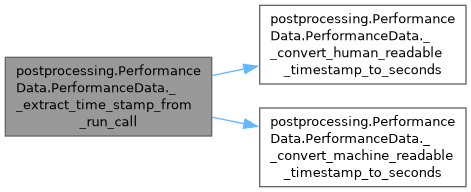
| __extract_time_stamp_from_run_call (self, line) | |
Definition at line 11 of file PerformanceData.py.
| postprocessing.PerformanceData.PerformanceData.__init__ | ( | self, | |
| file_name, | |||
| solver_name = "", | |||
| verbose = False ) |
:: Attributes
self._number_of_time_steps: Int Includes the empty time steps (warm-up phase) if you have adaptive time stepping.
:: Arguments
file_name: String This is a mandatory field, as it tells us which file to parse.
solver_name: String In theory, you could live without this one if you have only one solver. However, ExaHyPE2 supports multiple solvers within one grid and therefore needs a dedicated solver name to know where to look in the file. Leave it empty if there's only one solver.
Definition at line 12 of file PerformanceData.py.
|
private |
Hand in a string in the format hh:mm:ss.
Definition at line 84 of file PerformanceData.py.
Referenced by __extract_time_stamp_from_run_call().

|
private |
Hand in a string in nanoseconds and return double as s.
Definition at line 74 of file PerformanceData.py.
Referenced by __extract_time_stamp_from_run_call().

|
private |
Definition at line 108 of file PerformanceData.py.
References __convert_human_readable_timestamp_to_seconds(), __convert_machine_readable_timestamp_to_seconds(), and _parse_machine_time_format.
| postprocessing.PerformanceData.PerformanceData.__str__ | ( | self, | |
| * | args, | ||
| ** | kwargs ) |
Definition at line 98 of file PerformanceData.py.
References _number_of_time_steps, OutputFile.OutputFile._ranks, _ranks, OutputFile.OutputFile._threads, _threads, total_construction_steps, total_construction_time, total_plotting_steps, total_plotting_time, total_time_stepping_steps, total_time_stepping_time, exahype2::ccz4::ahf::AHCommonHorizonValidation.valid, peano4.api.toolbox.particles.postprocessing.Dataset.Dataset.valid, and valid.
| postprocessing.PerformanceData.PerformanceData.get_average_time_per_time_step | ( | self | ) |
Returns a whole array of times per time step, so you can plot the evoluation of the cost per step over time.
Definition at line 266 of file PerformanceData.py.
References get_time_per_time_step().

| postprocessing.PerformanceData.PerformanceData.get_time_per_time_step | ( | self | ) |
Returns a whole array of times per time step, so you can plot the evoluation of the cost per step over time.
Definition at line 253 of file PerformanceData.py.
References _time_step_time_stamp.
Referenced by get_average_time_per_time_step().

| postprocessing.PerformanceData.PerformanceData.get_time_step_real_time_stamps | ( | self | ) |
Returns a series of real time stamps (in seconds) snapshotted per time step.
This is not a mere copy, as the last entry in the local set is the end of the simulation. So we remove this one. At the same time, the very first entry is the start of the simulation or first time step where nothing happens yet (if we have to analyse the eigenvalue first).
Definition at line 287 of file PerformanceData.py.
References _time_step_time_stamp.
| postprocessing.PerformanceData.PerformanceData.get_time_step_simulated_time_stamps | ( | self | ) |
Returns a sequence of time stamps that are the simulated time stamps (where has the simulation been at a certain point) per step.
This is not a mere copy, as the last entry in the local set is the end of the simulation
Definition at line 306 of file PerformanceData.py.
References _simulated_time_stamp_max, _simulated_time_stamp_min, and uses_local_timestepping().

| postprocessing.PerformanceData.PerformanceData.get_time_step_time_step_size | ( | self | ) |
Definition at line 326 of file PerformanceData.py.
References _time_step_size_max, _time_step_size_min, and uses_local_timestepping().

| postprocessing.PerformanceData.PerformanceData.get_updates | ( | self | ) |
Definition at line 283 of file PerformanceData.py.
References _updates.
| postprocessing.PerformanceData.PerformanceData.parse | ( | self, | |
| verbose ) |
Definition at line 123 of file PerformanceData.py.
References OutputFile.OutputFile._file_name, peano4.api.Logger.Logger._file_name, _file_name, tarch.plotter.api.output.Visualiser.Visualiser._file_name, tarch.plotter.api.output.VTUUnstructuredGrid.VTUUnstructuredGrid._file_name, OutputFile.OutputFile._threads, _threads, exahype2::ccz4::ahf::AHCommonHorizonValidation.valid, peano4.api.toolbox.particles.postprocessing.Dataset.Dataset.valid, and valid.
| postprocessing.PerformanceData.PerformanceData.remove_first_n_entries | ( | self, | |
| count ) |
Remove the first count entries from the dataset.
Usually, count is one and anticipates that the solver requires one warm up sweep to determine h and the eigenvalue, e.g.
Definition at line 366 of file PerformanceData.py.
References _simulated_time_stamp_max, _simulated_time_stamp_min, _time_step_size_max, _time_step_size_min, and _time_step_time_stamp.
| postprocessing.PerformanceData.PerformanceData.time_per_time_step | ( | self | ) |
Time of last time step normalised (multiplied) with h^d.
Definition at line 356 of file PerformanceData.py.
References total_time_stepping_steps, and total_time_stepping_time.
| postprocessing.PerformanceData.PerformanceData.timesteps | ( | self | ) |
Should maybe eliminate the time steps that are not really steps.
Definition at line 345 of file PerformanceData.py.
References _time_step_size_max, and _time_step_size_min.
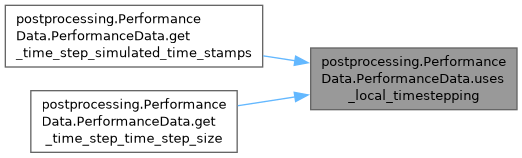
| postprocessing.PerformanceData.PerformanceData.uses_local_timestepping | ( | self | ) |
Definition at line 336 of file PerformanceData.py.
References _time_step_size_max, and _time_step_size_min.
Referenced by get_time_step_simulated_time_stamps(), and get_time_step_time_step_size().
|
protected |
Definition at line 37 of file PerformanceData.py.
|
protected |
Definition at line 138 of file PerformanceData.py.
|
protected |
Definition at line 32 of file PerformanceData.py.
Referenced by parse().
|
protected |
Definition at line 56 of file PerformanceData.py.
Referenced by __str__().
|
protected |
Definition at line 67 of file PerformanceData.py.
Referenced by __extract_time_stamp_from_run_call().
|
protected |
Definition at line 36 of file PerformanceData.py.
Referenced by __str__().
|
protected |
Definition at line 50 of file PerformanceData.py.
Referenced by get_time_step_simulated_time_stamps(), and remove_first_n_entries().
|
protected |
Definition at line 51 of file PerformanceData.py.
Referenced by get_time_step_simulated_time_stamps(), and remove_first_n_entries().
|
protected |
Definition at line 33 of file PerformanceData.py.
|
protected |
Definition at line 35 of file PerformanceData.py.
|
protected |
Definition at line 52 of file PerformanceData.py.
Referenced by get_time_step_time_step_size(), remove_first_n_entries(), timesteps(), and uses_local_timestepping().
|
protected |
Definition at line 53 of file PerformanceData.py.
Referenced by get_time_step_time_step_size(), remove_first_n_entries(), timesteps(), and uses_local_timestepping().
|
protected |
Definition at line 49 of file PerformanceData.py.
Referenced by get_time_per_time_step(), get_time_step_real_time_stamps(), and remove_first_n_entries().
|
protected |
Definition at line 54 of file PerformanceData.py.
Referenced by get_updates().
| list postprocessing.PerformanceData.PerformanceData.plotting_time_stamp = [] |
Definition at line 47 of file PerformanceData.py.
| postprocessing.PerformanceData.PerformanceData.total_construction_steps = 0 |
Definition at line 43 of file PerformanceData.py.
Referenced by __str__().
| postprocessing.PerformanceData.PerformanceData.total_construction_time = 0 |
Definition at line 39 of file PerformanceData.py.
Referenced by __str__().
| postprocessing.PerformanceData.PerformanceData.total_plotting_steps = 0 |
Definition at line 45 of file PerformanceData.py.
Referenced by __str__().
| postprocessing.PerformanceData.PerformanceData.total_plotting_time = 0 |
Definition at line 41 of file PerformanceData.py.
Referenced by __str__().
| postprocessing.PerformanceData.PerformanceData.total_time_stepping_steps = 0 |
Definition at line 44 of file PerformanceData.py.
Referenced by __str__(), and time_per_time_step().
| postprocessing.PerformanceData.PerformanceData.total_time_stepping_time = 0 |
Definition at line 40 of file PerformanceData.py.
Referenced by __str__(), and time_per_time_step().
| postprocessing.PerformanceData.PerformanceData.valid = False |
Definition at line 69 of file PerformanceData.py.
 1.15.0