 |
Peano
|
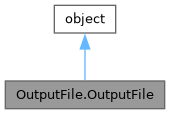
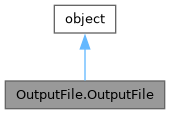
Represents single output file dumped by Peano. More...
Public Member Functions | |
| __init__ (self, name, verbose=False) | |
| parse (self) | |
| Parse Peano output file. | |
| ranks (self) | |
| threads_per_rank (self) | |
| runtime (self) | |
| Read out the total runtime. | |
| trees_per_snapshot (self, rank) | |
| Return a sequence of integers that holds the number of trees per snapshot. | |
| local_cells_per_snapshot (self, rank) | |
| Return local cells per snaphot. | |
| virtual_cells_per_snapshot (self, rank) | |
| Return local cells per snaphot. | |
| total_local_cells_per_snapshot (self, rank) | |
| Return the total number of cells per snapshot for this rank. | |
| min_local_cells_per_snapshot (self, rank) | |
| Return the total number of cells per snapshot for this rank. | |
| max_local_cells_per_snapshot (self, rank) | |
| Return the total number of cells per snapshot for this rank. | |
| min_virtual_cells_per_snapshot (self, rank) | |
| Return the total number of cells per snapshot for this rank. | |
| max_virtual_cells_per_snapshot (self, rank) | |
| Return the total number of cells per snapshot for this rank. | |
| is_valid (self) | |
Protected Attributes | |
| _file_name = name | |
| bool | _has_parsed = False |
| _verbose = verbose | |
| dict | _snapshot_lines = {} |
| int | _ranks = 1 |
| _threads = int( line.split( "threads" )[0].split( "(" )[-1]) | |
| _runtime = float( line.split( "time stepping:" )[1].split( "s")[0] ) | |
Represents single output file dumped by Peano.
This class extracts all the load balancing-related information from an output file, i.e. is basically an abstraction of a file parser. It also holds some very basic runtime data.
| name | File name |
Definition at line 4 of file OutputFile.py.
| OutputFile.OutputFile.__init__ | ( | self, | |
| name, | |||
| verbose = False ) |
Definition at line 15 of file OutputFile.py.
| OutputFile.OutputFile.is_valid | ( | self | ) |
Definition at line 292 of file OutputFile.py.
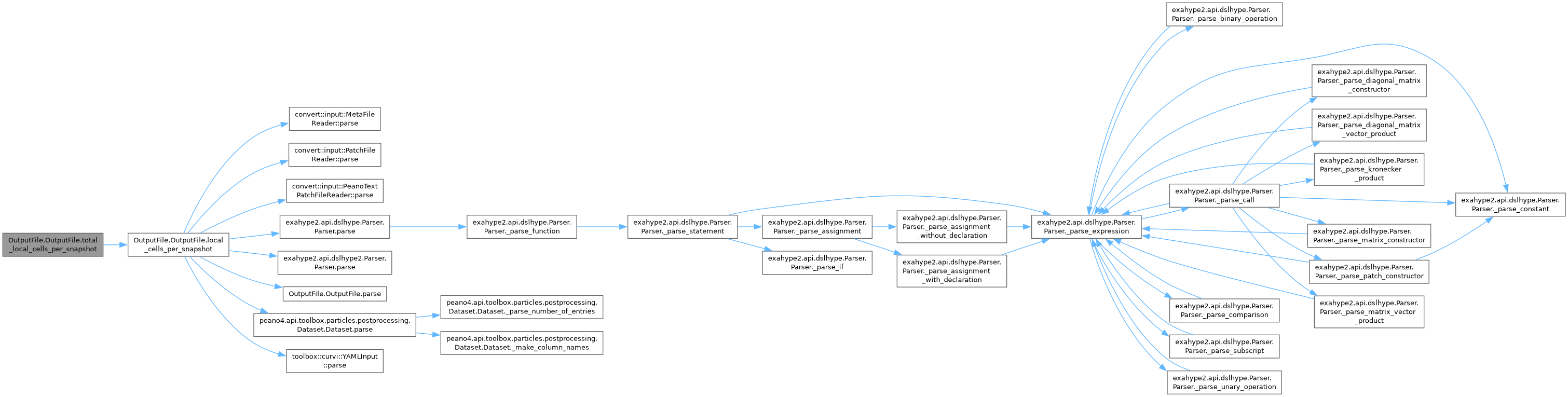
| OutputFile.OutputFile.local_cells_per_snapshot | ( | self, | |
| rank ) |
Return local cells per snaphot.
This is a sequence of sequences. For each snapshot for this rank, we store one sequence with all the local cells in this snapshot. The standard plot_load_distribution.py script feeds this data into a scatter plot. For many cases, we might however be interested in the maximum value:
Definition at line 131 of file OutputFile.py.
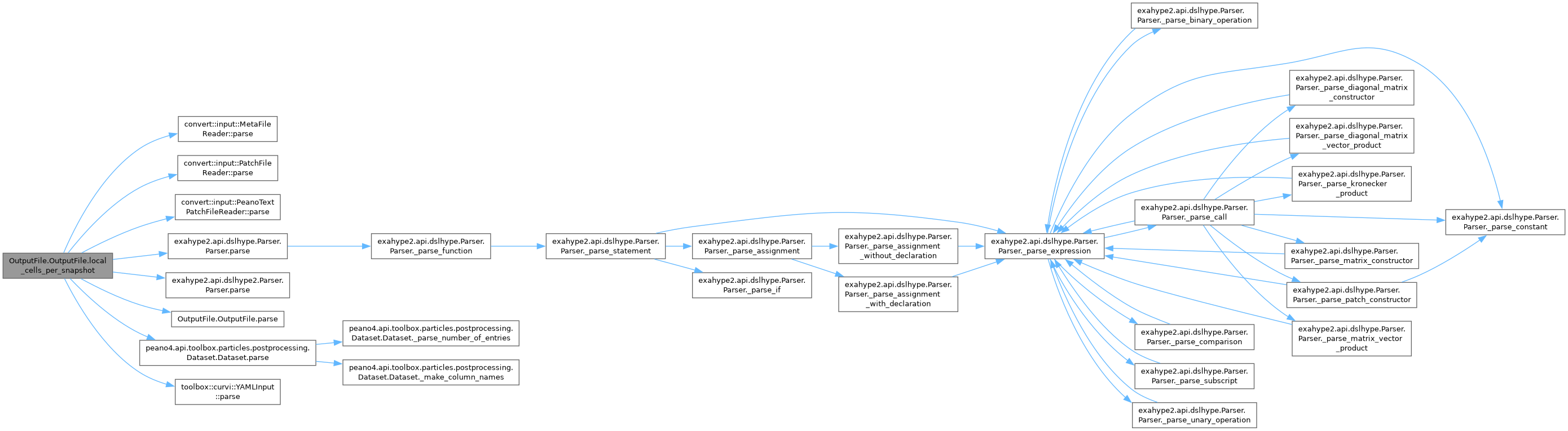
References _ranks, _snapshot_lines, convert::input::MetaFileReader.parse(), convert::input::PatchFileReader.parse(), convert::input::PeanoTextPatchFileReader.parse(), exahype2.api.dslhype.Parser.Parser.parse(), exahype2.api.dslhype2.Parser.Parser.parse(), parse(), peano4.api.toolbox.particles.postprocessing.Dataset.Dataset.parse(), and toolbox::curvi::YAMLInput.parse().
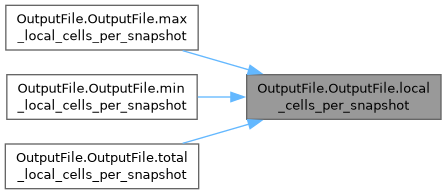
Referenced by max_local_cells_per_snapshot(), min_local_cells_per_snapshot(), and total_local_cells_per_snapshot().
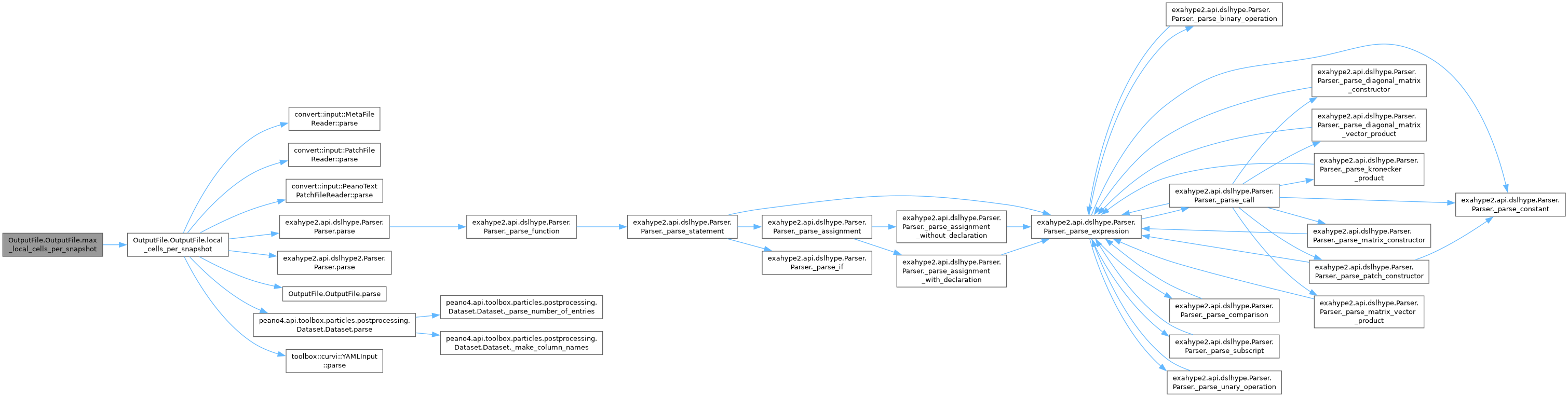
| OutputFile.OutputFile.max_local_cells_per_snapshot | ( | self, | |
| rank ) |
Return the total number of cells per snapshot for this rank.
The total number of cells is an interesting quantity, as it allows us to compare the load of different ranks.
Definition at line 232 of file OutputFile.py.
References local_cells_per_snapshot().
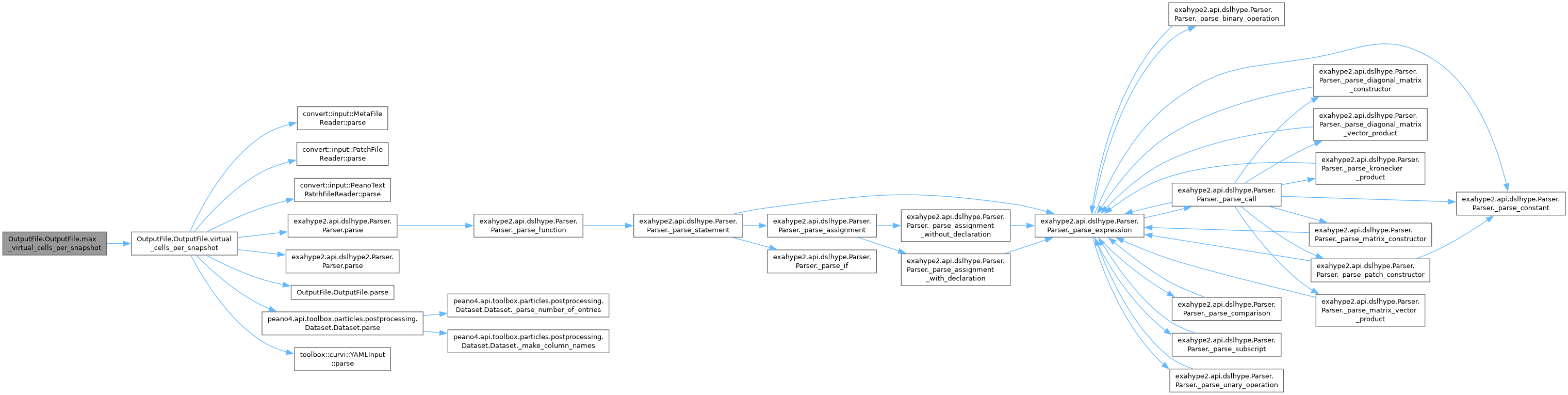
| OutputFile.OutputFile.max_virtual_cells_per_snapshot | ( | self, | |
| rank ) |
Return the total number of cells per snapshot for this rank.
The total number of cells is an interesting quantity, as it allows us to compare the load of different ranks.
Definition at line 272 of file OutputFile.py.
References virtual_cells_per_snapshot().
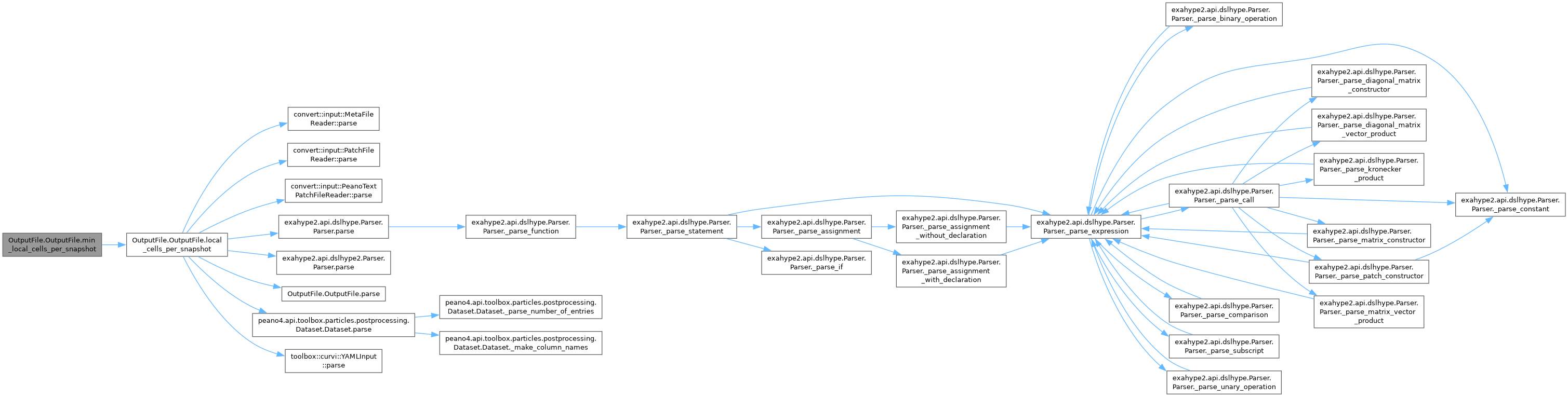
| OutputFile.OutputFile.min_local_cells_per_snapshot | ( | self, | |
| rank ) |
Return the total number of cells per snapshot for this rank.
The total number of cells is an interesting quantity, as it allows us to compare the load of different ranks.
Definition at line 212 of file OutputFile.py.
References local_cells_per_snapshot().
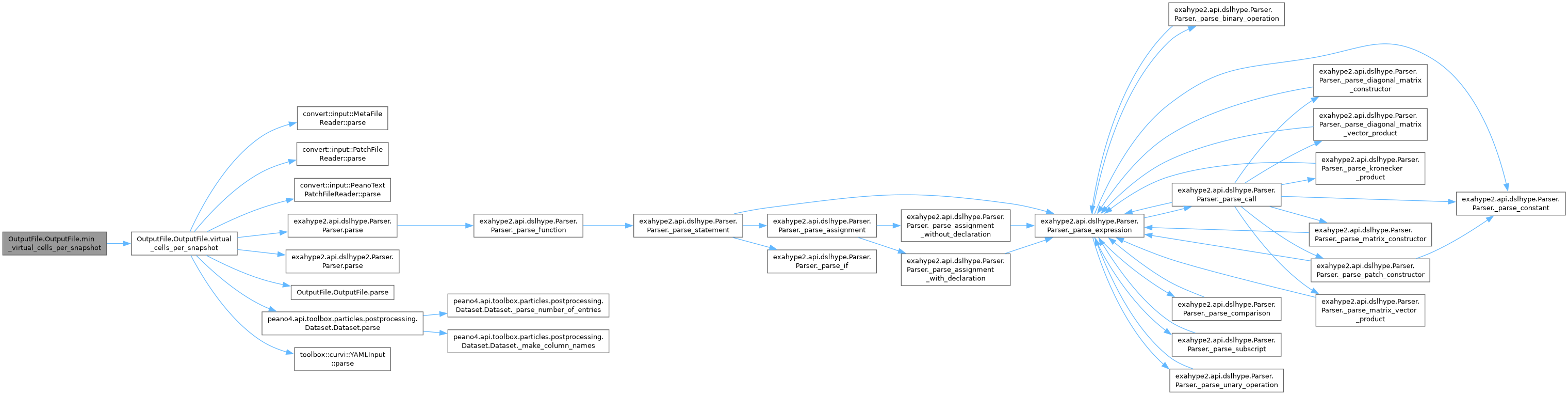
| OutputFile.OutputFile.min_virtual_cells_per_snapshot | ( | self, | |
| rank ) |
Return the total number of cells per snapshot for this rank.
The total number of cells is an interesting quantity, as it allows us to compare the load of different ranks.
Definition at line 252 of file OutputFile.py.
References virtual_cells_per_snapshot().
| OutputFile.OutputFile.parse | ( | self | ) |
Parse Peano output file.
Build up a tuple of (x_data,y_data_local,y_data_remote) internally but also extract some meta data
Definition at line 26 of file OutputFile.py.
References _file_name, peano4.api.Logger.Logger._file_name, tarch.plotter.api.output.Visualiser.Visualiser._file_name, tarch.plotter.api.output.VTUUnstructuredGrid.VTUUnstructuredGrid._file_name, _has_parsed, _verbose, and peano4.api.toolbox.particles.postprocessing.ParticleVTUReader.ParticleVTUReader._verbose.
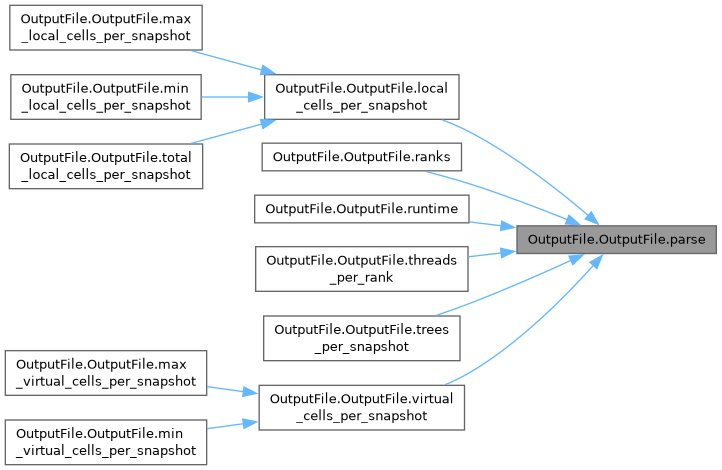
Referenced by local_cells_per_snapshot(), ranks(), runtime(), threads_per_rank(), trees_per_snapshot(), and virtual_cells_per_snapshot().
| OutputFile.OutputFile.ranks | ( | self | ) |
Definition at line 89 of file OutputFile.py.
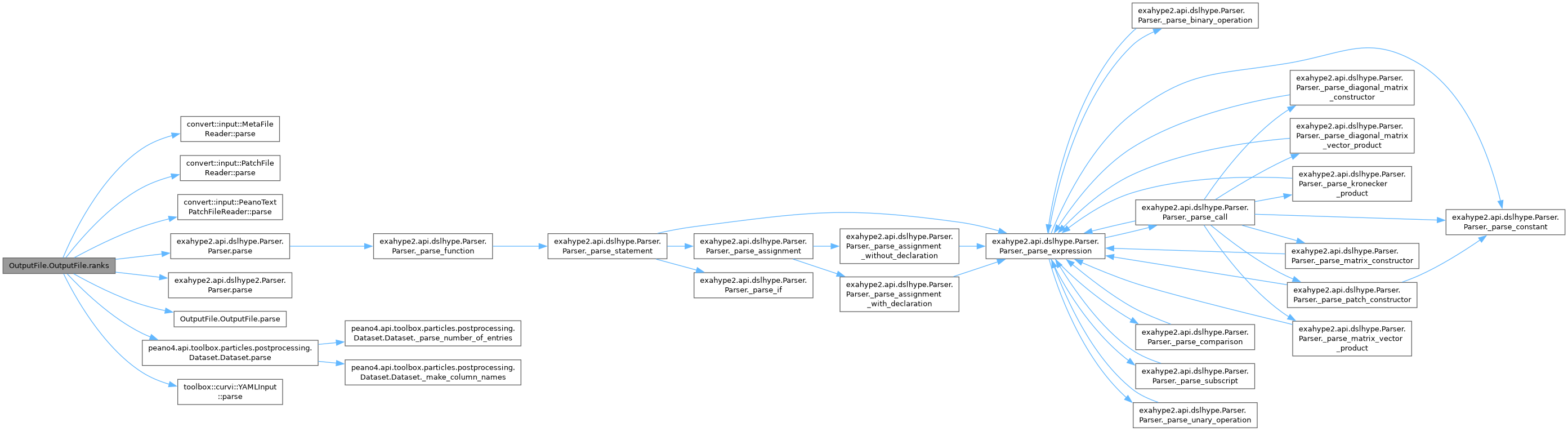
References _ranks, convert::input::MetaFileReader.parse(), convert::input::PatchFileReader.parse(), convert::input::PeanoTextPatchFileReader.parse(), exahype2.api.dslhype.Parser.Parser.parse(), exahype2.api.dslhype2.Parser.Parser.parse(), parse(), peano4.api.toolbox.particles.postprocessing.Dataset.Dataset.parse(), and toolbox::curvi::YAMLInput.parse().
| OutputFile.OutputFile.runtime | ( | self | ) |
Read out the total runtime.
Definition at line 101 of file OutputFile.py.
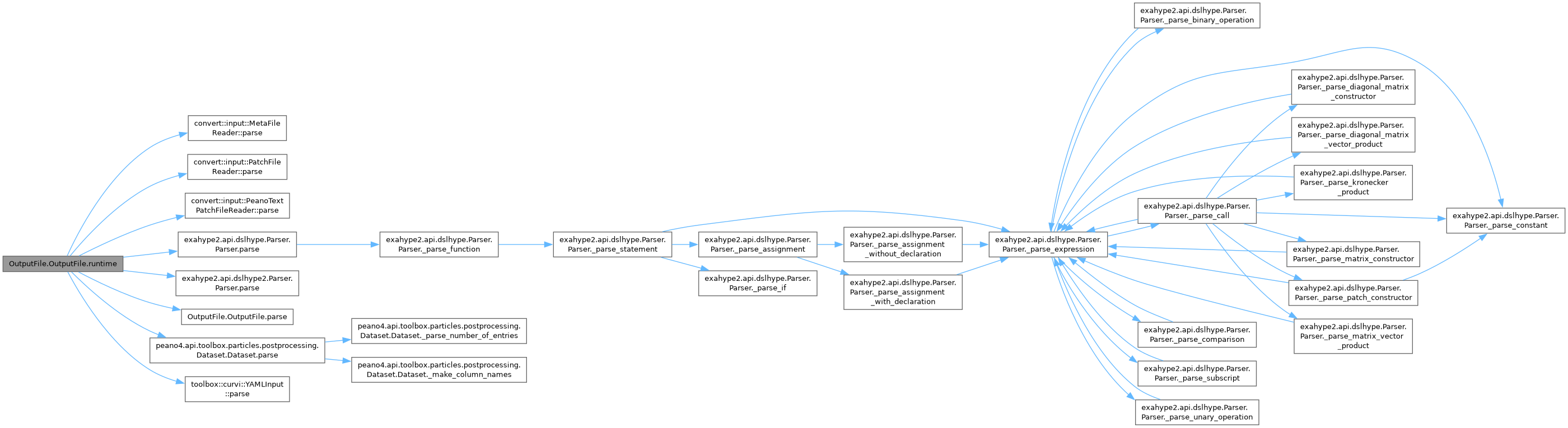
References _runtime, convert::input::MetaFileReader.parse(), convert::input::PatchFileReader.parse(), convert::input::PeanoTextPatchFileReader.parse(), exahype2.api.dslhype.Parser.Parser.parse(), exahype2.api.dslhype2.Parser.Parser.parse(), parse(), peano4.api.toolbox.particles.postprocessing.Dataset.Dataset.parse(), and toolbox::curvi::YAMLInput.parse().
| OutputFile.OutputFile.threads_per_rank | ( | self | ) |
Definition at line 95 of file OutputFile.py.
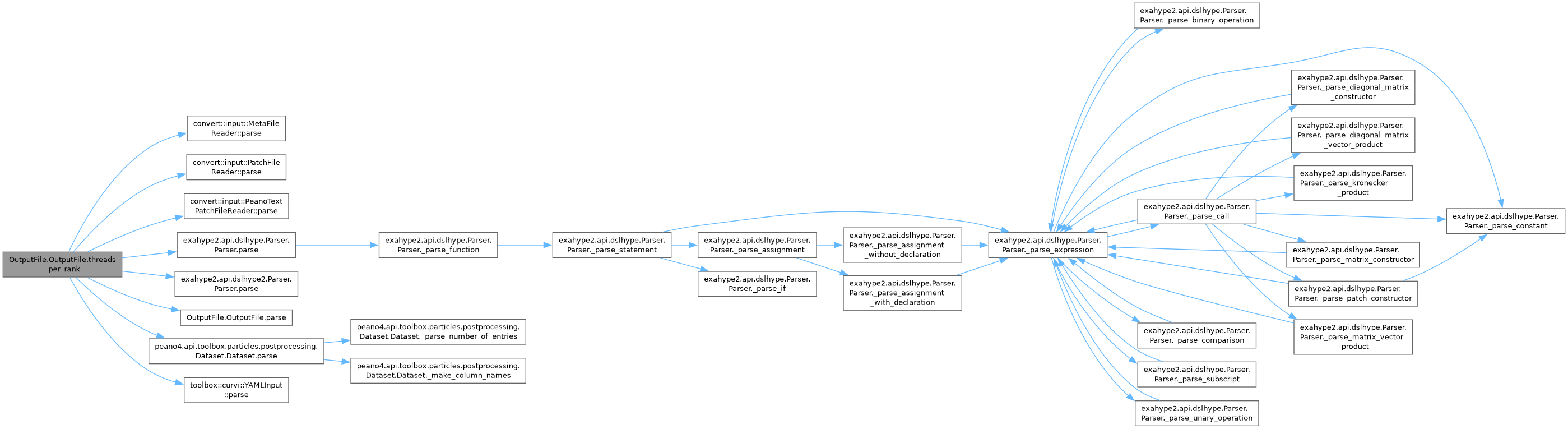
References _threads, convert::input::MetaFileReader.parse(), convert::input::PatchFileReader.parse(), convert::input::PeanoTextPatchFileReader.parse(), exahype2.api.dslhype.Parser.Parser.parse(), exahype2.api.dslhype2.Parser.Parser.parse(), parse(), peano4.api.toolbox.particles.postprocessing.Dataset.Dataset.parse(), and toolbox::curvi::YAMLInput.parse().
| OutputFile.OutputFile.total_local_cells_per_snapshot | ( | self, | |
| rank ) |
Return the total number of cells per snapshot for this rank.
The total number of cells is an interesting quantity, as it allows us to compare the load of different ranks.
Definition at line 192 of file OutputFile.py.
References local_cells_per_snapshot().
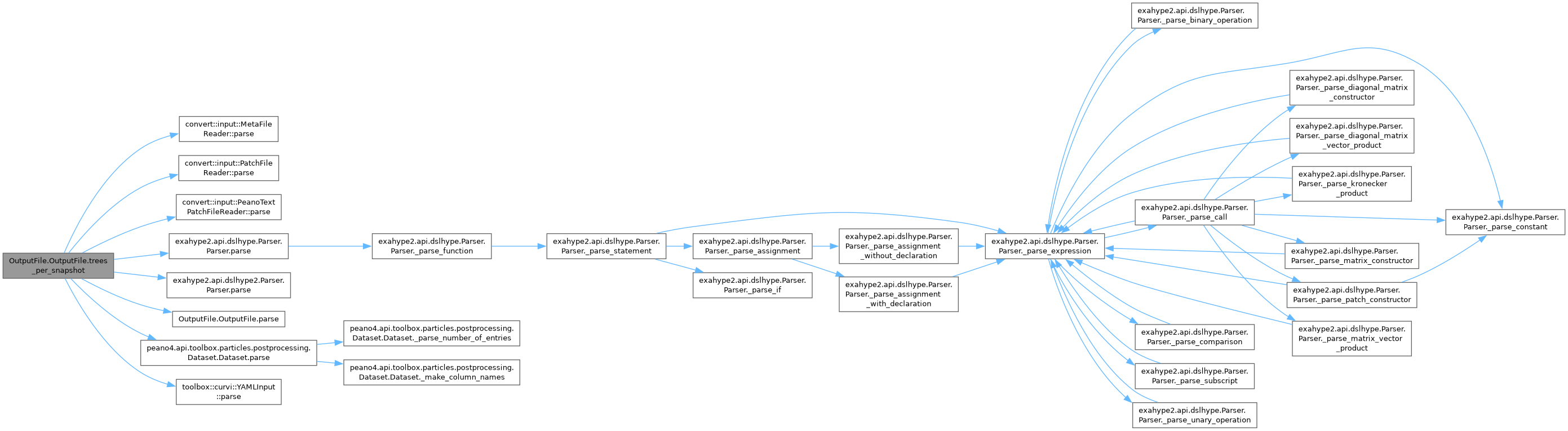
| OutputFile.OutputFile.trees_per_snapshot | ( | self, | |
| rank ) |
Return a sequence of integers that holds the number of trees per snapshot.
Definition at line 111 of file OutputFile.py.
References _ranks, _snapshot_lines, convert::input::MetaFileReader.parse(), convert::input::PatchFileReader.parse(), convert::input::PeanoTextPatchFileReader.parse(), exahype2.api.dslhype.Parser.Parser.parse(), exahype2.api.dslhype2.Parser.Parser.parse(), parse(), peano4.api.toolbox.particles.postprocessing.Dataset.Dataset.parse(), and toolbox::curvi::YAMLInput.parse().
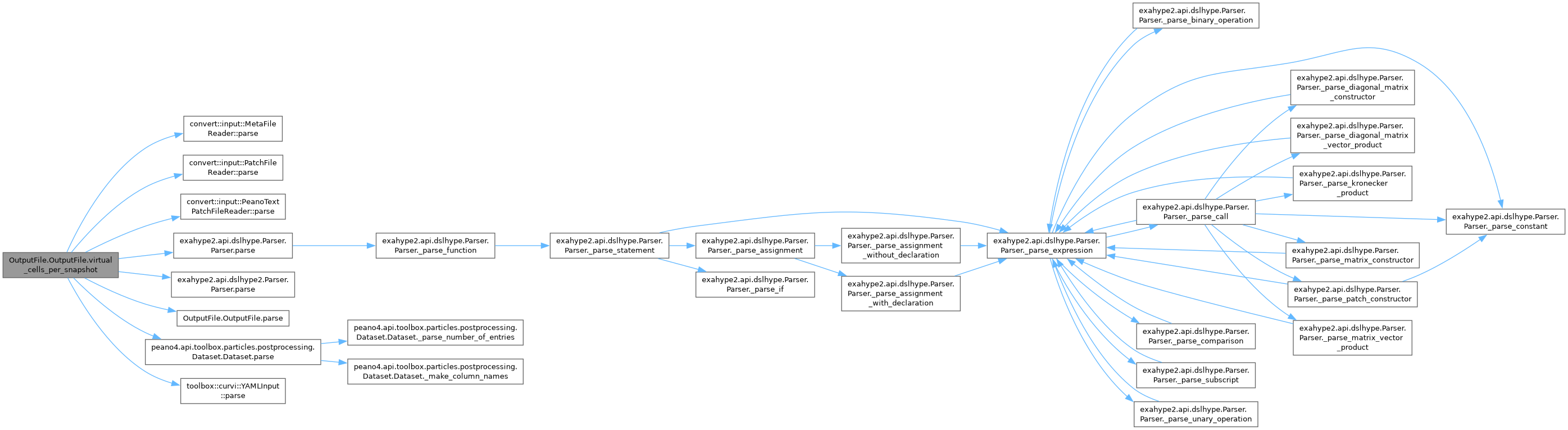
| OutputFile.OutputFile.virtual_cells_per_snapshot | ( | self, | |
| rank ) |
Return local cells per snaphot.
This is a sequence of sequences. For each snapshot for this rank, we store one sequence with all the local cells in this snapshot.
Definition at line 165 of file OutputFile.py.
References _ranks, _snapshot_lines, convert::input::MetaFileReader.parse(), convert::input::PatchFileReader.parse(), convert::input::PeanoTextPatchFileReader.parse(), exahype2.api.dslhype.Parser.Parser.parse(), exahype2.api.dslhype2.Parser.Parser.parse(), parse(), peano4.api.toolbox.particles.postprocessing.Dataset.Dataset.parse(), and toolbox::curvi::YAMLInput.parse().
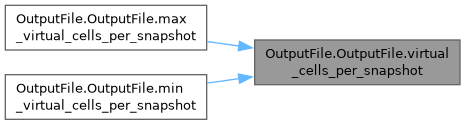
Referenced by max_virtual_cells_per_snapshot(), and min_virtual_cells_per_snapshot().
|
protected |
Definition at line 20 of file OutputFile.py.
Referenced by parse(), and postprocessing.PerformanceData.PerformanceData.parse().
|
protected |
Definition at line 21 of file OutputFile.py.
Referenced by parse().
|
protected |
Definition at line 51 of file OutputFile.py.
Referenced by postprocessing.PerformanceData.PerformanceData.__str__(), local_cells_per_snapshot(), ranks(), trees_per_snapshot(), and virtual_cells_per_snapshot().
|
protected |
Definition at line 66 of file OutputFile.py.
Referenced by runtime().
|
protected |
Definition at line 45 of file OutputFile.py.
Referenced by local_cells_per_snapshot(), trees_per_snapshot(), and virtual_cells_per_snapshot().
|
protected |
Definition at line 53 of file OutputFile.py.
Referenced by postprocessing.PerformanceData.PerformanceData.__str__(), postprocessing.PerformanceData.PerformanceData.parse(), and threads_per_rank().
|
protected |
Definition at line 22 of file OutputFile.py.
Referenced by parse().
 1.15.0