 |
Peano
|
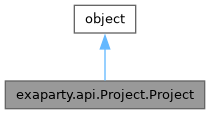
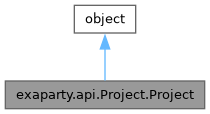
ExaParty project. More...
Public Member Functions | |
| __init__ (self, namespace, project_name, directory=".", executable="exaparty") | |
| set_load_balancing (self, load_balancer_name, load_balancer_arguments) | |
| load_balancer_name: string Should be full-qualified name of the load balancer. | |
| set_Peano4_installation (self, src_path, mode=peano4.api.output.CompileMode.RELEASE) | |
| src_path: string Path (relative or absolute) to the src directory of Peano. | |
| real_mesh_size (self, target_h) | |
| Translate a mesh size into its real Peano mesh size. | |
| set_global_simulation_parameters (self, dimensions, offset, domain_size, min_end_time, max_end_time, first_plot_time_stamp, time_in_between_plots, periodic_BC=[False, False, False], plotter_precision=5, initial_grid_coarse=False) | |
| offset and size should be lists with dimensions double entries. | |
| set_output_path (self, path) | |
| add_particle_species (self, Particle particle) | |
| Add a new particle species (type) to the project. | |
| generate_Peano4_project (self, verbose=False) | |
| Build the Peano4 project. | |
| set_realisation (self, parallelisation=Parallelisation_DomainDecomposition, storage=Storage_Scattered, sorting=Sorting_MultiscaleSort, kernel_optimisation=KernelOptimisation_NoOptimisation) | |
| Specify the realisation of the project: Select. | |
| main_file_template (self) | |
Data Fields | |
| algorithm_step_create_grid = peano4.api.solversteps.Step("CreateGrid", False) | |
| algorithm_step_initial_conditions | |
| algorithm_step_plot = peano4.api.solversteps.Step("Plot", False) | |
| algorithm_step_cleanup = peano4.api.solversteps.Step("Cleanup", False) | |
| list | additional_action_sets_per_solver_step = [] |
| tuple | algorithm_steps_task_graph_compiler = None |
| tuple | initialisation_steps_task_graph_compiler = None |
Static Public Attributes | |
| str | LibraryDebug = "_debug" |
| str | LibraryRelease = "" |
| str | LibraryTrace = "_trace" |
| str | LibraryAsserts = "_asserts" |
| str | LibraryStats = "_stats" |
Protected Attributes | |
| _project = peano4.api.Project(namespace, project_name, directory) | |
| list | _domain_offset = [0.0, 0.0, 0.0] |
| list | _domain_size = [1.0, 1.0, 1.0] |
| int | _dimensions = 2 |
| float | _min_terminal_time = 1.0 |
| float | _max_terminal_time = 0.0 |
| bool | _make_initial_grid_coarse = False |
| float | _first_plot_time_stamp = 0.0 |
| float | _time_in_between_plots = 0.1 |
| str | _load_balancer_name = "" |
| str | _load_balancer_arguments = "" |
| str | _Peano_src_directory = "." |
| _build_mode = peano4.api.output.CompileMode.ASSERTS | |
| _executable_name = executable | |
| list | _periodic_BC = [False, False, False] |
| str | _output_path = "./" |
| list | _particle_species = [] |
| list | _particle_species_set = [] |
| float | _global_max_h = 0.0 |
| _global_min_h = sys.float_info.max | |
| _plotter_precision | |
Private Member Functions | |
| __compute_global_max_h (self) | |
| Run over all species specified and find out what their maximum (coarsest) h is. | |
| __compute_global_min_h (self) | |
| Run over all species specified and find out what their minimum (finest) h is. | |
| __export_constants (self) | |
| We export ExaParty's constants. | |
| __real_max_mesh_size (self) | |
| Return the max mesh size that the code really will use. | |
| __real_min_mesh_size (self) | |
| Return the min mesh size that the code really will use. | |
| __configure_makefile (self) | |
| __generate_global_state_files (self) | |
ExaParty project.
Represents an abstract ExaParty project. An ExaParty project is a Peano 4 project with a particular set of actions (algorithmic phases) that you can choose from and with particular solver types. It realises a builder mechanism, i.e. you build up your ExaParty project and then you finally tell the project "give me the Peano 4 project". From hereon, you can use this Peano 4 project to actually set up the Peano 4 application.
Please do not use this class directly. Use one of its subclasses.
Definition at line 27 of file Project.py.
| exaparty.api.Project.Project.__init__ | ( | self, | |
| namespace, | |||
| project_name, | |||
| directory = ".", | |||
| executable = "exaparty" ) |
Definition at line 46 of file Project.py.
|
private |
Run over all species specified and find out what their maximum (coarsest) h is.
This value is then used to constrain the mesh adaptivity: The mesh should never be coarser than this, but also the initial mesh should meet this global maximum h.
The outcome is stored in self._global_max_h.
Definition at line 134 of file Project.py.
Referenced by generate_Peano4_project().

|
private |
Run over all species specified and find out what their minimum (finest) h is.
This value is then used to constrain the mesh adaptivity: The mesh should never be coarser than this, but also the initial mesh should meet this global maximum h.
The outcome is stored in self._global_min_h.
Definition at line 151 of file Project.py.
Referenced by generate_Peano4_project().

|
private |
Definition at line 381 of file Project.py.
References convert::input::PeanoTextPatchFileReader._dimensions, exahype2.api.dslhype.SyntaxTree.Matrix._dimensions, exahype2.api.dslhype.SyntaxTree.MemoryAllocation._dimensions, exahype2.api.dslhype.SyntaxTree.MemoryDeallocation._dimensions, exahype2.api.dslhype.SyntaxTree.Subscript._dimensions, exahype2.api.dslhype.SyntaxTree.TDataBlock._dimensions, exahype2.api.dslhype.SyntaxTree.TSimpleMemref._dimensions, exahype2.api.Project.Project._dimensions, _dimensions, exahype2.api.Project.Project._executable_name, _executable_name, and _project.
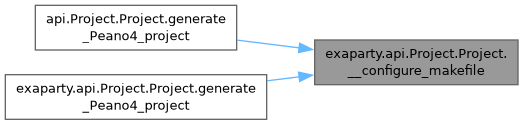
Referenced by api.Project.Project.generate_Peano4_project(), and generate_Peano4_project().
|
private |
We export ExaParty's constants.
Besides the constants from ExaParty, I also export some parameters from Peano onto the ExaParty constants file. Therefore, it is important that you parse the configure output before we export the constants.
Definition at line 168 of file Project.py.
References convert::input::PeanoTextPatchFileReader._dimensions, exahype2.api.dslhype.SyntaxTree.Matrix._dimensions, exahype2.api.dslhype.SyntaxTree.MemoryAllocation._dimensions, exahype2.api.dslhype.SyntaxTree.MemoryDeallocation._dimensions, exahype2.api.dslhype.SyntaxTree.Subscript._dimensions, exahype2.api.dslhype.SyntaxTree.TDataBlock._dimensions, exahype2.api.dslhype.SyntaxTree.TSimpleMemref._dimensions, exahype2.api.Project.Project._dimensions, _dimensions, exahype2.api.Project.Project._domain_offset, _domain_offset, exahype2.api.Project.Project._domain_size, _domain_size, exahype2.api.fv.PlotAsVTKFile.PlotAsVTKFile._first_plot_time_stamp, exahype2.api.fv.WriteCheckpoint.WriteCheckpoint._first_plot_time_stamp, exahype2.api.rkfd4.PlotAsVTKFile.PlotAsVTKFile._first_plot_time_stamp, exahype2.api.rkfd4.WriteCheckpoint.WriteCheckpoint._first_plot_time_stamp, _first_plot_time_stamp, exahype2.api.Project.Project._max_terminal_time, _max_terminal_time, exahype2.api.Project.Project._min_terminal_time, _min_terminal_time, _project, exahype2.api.fv.PlotAsVTKFile.PlotAsVTKFile._time_in_between_plots, exahype2.api.fv.WriteCheckpoint.WriteCheckpoint._time_in_between_plots, exahype2.api.rkfd4.PlotAsVTKFile.PlotAsVTKFile._time_in_between_plots, exahype2.api.rkfd4.WriteCheckpoint.WriteCheckpoint._time_in_between_plots, and _time_in_between_plots.
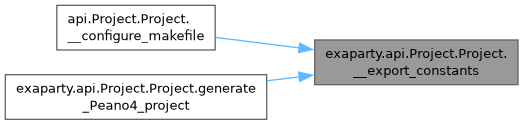
Referenced by api.Project.Project.__configure_makefile(), and generate_Peano4_project().
|
private |
Definition at line 440 of file Project.py.
References exahype2.api.Project.Project._load_balancer_arguments, _load_balancer_arguments, exahype2.api.Project.Project._load_balancer_name, _load_balancer_name, _particle_species, and _project.
Referenced by generate_Peano4_project().

|
private |
Return the max mesh size that the code really will use.
See the explanation in the generated Readme.md file or in real_mesh_size why this value is smaller than the real mesh size.
Definition at line 357 of file Project.py.
References _global_max_h, and real_mesh_size().

|
private |
Return the min mesh size that the code really will use.
See the explanation in the generated Readme.md file or in real_mesh_size why this value is smaller than the real mesh size.
Definition at line 369 of file Project.py.
References _global_min_h, and real_mesh_size().

| exaparty.api.Project.Project.add_particle_species | ( | self, | |
| Particle | particle ) |
Add a new particle species (type) to the project.
You get the container back in which the particles are handled on the rank. Use this one where another action set requires a particle set.
Definition at line 465 of file Project.py.
References _particle_species, and _particle_species_set.
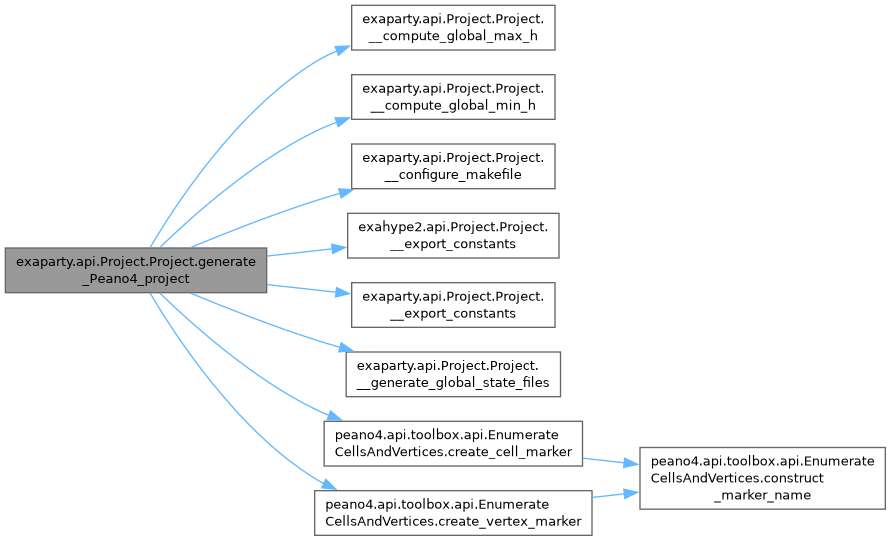
| exaparty.api.Project.Project.generate_Peano4_project | ( | self, | |
| verbose = False ) |
Build the Peano4 project.
The main job of this routine is to add all the action sets et al that you require to run this ExaHyPE2 application.
This routine generates a Peano project, i.e. the domain-specific ExaHyPE view is translated into a Peano model. Once you have called this routine, any changes to the ExaHyPE 2 configuration do not propagate into the Peano setup anymore. If you alter the ExaHyPE setup, you have to call generate_Peano4_project() again to get a new snapshot/version of the Peano setup.
The initial grid will be a regular one, spanned through
According to the documentation of peano4.api.toolbox.CreateRegularGrid, the action set will produce a mesh that is just finer than the mesh width passed, so we meet the max mesh width, but do not create a mesh that is significantly finer.
As we insert particles in SPH, we have therefore to make this initial resolution three times coarser than what we allow, as we only insert particles into the finest mesh.
The core contribution of the generation is the task graph compiler which really is a mapping of algorithm steps per particle species onto grid sweeps. The actual mapping is outsourced into the function represented by self.task_graph_compiler. This way, users can switch the translator's behaviour. This function returns a sequence of mesh traversals. On top of that, we have the default traversals to create a grid, to plot it, to initialise the setup, and to clean up after we're done.
Once we have our three default steps plus a sequence of algorithmic steps per time step, we run through the following steps:
The particle initialisation might end up with an invalid association of particles to vertices. The graph compiler might make the first step of a time step sequence sort if and only if the last one has altered the particles' position. Consequently, we might end up with an initialisation which yields an inconsistent data association. We therefore make it sort the particles, but we need another grid sweep to finalise this sort in case we have to do some global rearrangements. This is our rationale why we realise the initialisation in two steps.
Definition at line 479 of file Project.py.
References __compute_global_max_h(), __compute_global_min_h(), __configure_makefile(), exahype2.api.Project.Project.__export_constants(), __export_constants(), __generate_global_state_files(), exahype2.api.Project.Project._build_mode, _build_mode, _global_max_h, _global_min_h, _make_initial_grid_coarse, _particle_species_set, exahype2.api.Project.Project._Peano_src_directory, _Peano_src_directory, _project, additional_action_sets_per_solver_step, algorithm_step_cleanup, algorithm_step_create_grid, algorithm_step_initial_conditions, algorithm_step_plot, algorithm_steps_task_graph_compiler, peano4.api.toolbox.api.EnumerateCellsAndVertices.create_cell_marker(), peano4.api.toolbox.api.EnumerateCellsAndVertices.create_vertex_marker(), and initialisation_steps_task_graph_compiler.
| exaparty.api.Project.Project.main_file_template | ( | self | ) |
Definition at line 975 of file Project.py.
| exaparty.api.Project.Project.real_mesh_size | ( | self, | |
| target_h ) |
Translate a mesh size into its real Peano mesh size.
Peano uses three-partitioning. That is, it will neve be able to match given refinement instructions exactly. All it can do is to approximate them.
Definition at line 338 of file Project.py.
References exahype2.api.Project.Project._domain_size, and _domain_size.
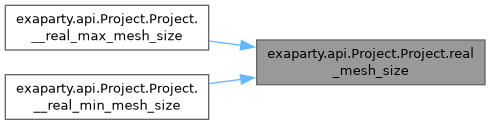
Referenced by __real_max_mesh_size(), and __real_min_mesh_size().
| exaparty.api.Project.Project.set_global_simulation_parameters | ( | self, | |
| dimensions, | |||
| offset, | |||
| domain_size, | |||
| min_end_time, | |||
| max_end_time, | |||
| first_plot_time_stamp, | |||
| time_in_between_plots, | |||
| periodic_BC = [False, False, False], | |||
| plotter_precision = 5, | |||
| initial_grid_coarse = False ) |
offset and size should be lists with dimensions double entries.
first_plot_time_stamp: Float Is irrelevant if time_in_between_plots equals zero
time_in_between_plots: Float Set to zero if you don't want to have any plots
max_end_time: Float If you set it zero (or actually any value msmaller than min_end_time), then the code will run until the cell that lags behind the most hits the min time. If you specify a valid max time however, you can stop the sim as soon as the most advanced cell exceeds this threshold.
initial_grid_coarse: Bool If true, make the initial grid coarse, i.e. according to max cell size, which is specified via max_h in the added particle species. Otherwise, make initial grid fine, i.e. according to the particle species' min_h.
Definition at line 385 of file Project.py.
References convert::input::PeanoTextPatchFileReader._dimensions, exahype2.api.dslhype.SyntaxTree.Matrix._dimensions, exahype2.api.dslhype.SyntaxTree.MemoryAllocation._dimensions, exahype2.api.dslhype.SyntaxTree.MemoryDeallocation._dimensions, exahype2.api.dslhype.SyntaxTree.Subscript._dimensions, exahype2.api.dslhype.SyntaxTree.TDataBlock._dimensions, exahype2.api.dslhype.SyntaxTree.TSimpleMemref._dimensions, exahype2.api.Project.Project._dimensions, _dimensions, exahype2.api.Project.Project._domain_offset, _domain_offset, exahype2.api.Project.Project._domain_size, _domain_size, exahype2.api.fv.PlotAsVTKFile.PlotAsVTKFile._first_plot_time_stamp, exahype2.api.fv.WriteCheckpoint.WriteCheckpoint._first_plot_time_stamp, exahype2.api.rkfd4.PlotAsVTKFile.PlotAsVTKFile._first_plot_time_stamp, exahype2.api.rkfd4.WriteCheckpoint.WriteCheckpoint._first_plot_time_stamp, _first_plot_time_stamp, _make_initial_grid_coarse, exahype2.api.Project.Project._max_terminal_time, _max_terminal_time, exahype2.api.Project.Project._min_terminal_time, _min_terminal_time, exahype2.api.Project.Project._periodic_BC, _periodic_BC, exahype2.api.fv.PlotAsVTKFile.PlotAsVTKFile._plotter_precision, exahype2.api.fv.WriteCheckpoint.WriteCheckpoint._plotter_precision, exahype2.api.rkfd4.PlotAsVTKFile.PlotAsVTKFile._plotter_precision, exahype2.api.rkfd4.WriteCheckpoint.WriteCheckpoint._plotter_precision, _plotter_precision, exahype2.api.fv.PlotAsVTKFile.PlotAsVTKFile._time_in_between_plots, exahype2.api.fv.WriteCheckpoint.WriteCheckpoint._time_in_between_plots, exahype2.api.rkfd4.PlotAsVTKFile.PlotAsVTKFile._time_in_between_plots, exahype2.api.rkfd4.WriteCheckpoint.WriteCheckpoint._time_in_between_plots, and _time_in_between_plots.
| exaparty.api.Project.Project.set_load_balancing | ( | self, | |
| load_balancer_name, | |||
| load_balancer_arguments ) |
load_balancer_name: string Should be full-qualified name of the load balancer.
By default, I recommend to pass "toolbox::loadbalancing::strategies::SpreadOutHierarchically", but you might be well-advices to study different classes within the namespace toolbox.loadbalancing.
load_balancer_arguments: string If your load balancing requires parameters, add them here. It is a string that will be copied into the C++ class instantiation. Please add the brackets yourself, i.e. "(3,4,5)" is fine, but "3,4,5" is not. The only exception is the empty parameter list. Here, you can/should simply add the empty string.
Definition at line 84 of file Project.py.
References exahype2.api.Project.Project._load_balancer_arguments, _load_balancer_arguments, exahype2.api.Project.Project._load_balancer_name, and _load_balancer_name.
| exaparty.api.Project.Project.set_output_path | ( | self, | |
| path ) |
Definition at line 435 of file Project.py.
References exahype2.api.blockstructured.LoadCheckpoint.LoadCheckpoint._output_path, exahype2.api.fv.PlotAsVTKFile.PlotAsVTKFile._output_path, exahype2.api.fv.WriteCheckpoint.WriteCheckpoint._output_path, exahype2.api.Project.Project._output_path, exahype2.api.rkfd4.PlotAsVTKFile.PlotAsVTKFile._output_path, exahype2.api.rkfd4.WriteCheckpoint.WriteCheckpoint._output_path, and _output_path.
| exaparty.api.Project.Project.set_Peano4_installation | ( | self, | |
| src_path, | |||
| mode = peano4.api.output.CompileMode.RELEASE ) |
src_path: string Path (relative or absolute) to the src directory of Peano.
This path should hold both the headers (in subdirectories) and all the static libraries.
mode: peano4.api.output.CompileMode
Definition at line 110 of file Project.py.
References exahype2.api.Project.Project._build_mode, _build_mode, exahype2.api.Project.Project._Peano_src_directory, and _Peano_src_directory.
| exaparty.api.Project.Project.set_realisation | ( | self, | |
| parallelisation = Parallelisation_DomainDecomposition, | |||
| storage = Storage_Scattered, | |||
| sorting = Sorting_MultiscaleSort, | |||
| kernel_optimisation = KernelOptimisation_NoOptimisation ) |
Specify the realisation of the project: Select.
Available options for all these are kept in ./ProjectRealisation.py.
Only call this function after adding particle species to the project via self.add_particle_species().
Definition at line 714 of file Project.py.
References _particle_species, _particle_species_set, algorithm_steps_task_graph_compiler, and initialisation_steps_task_graph_compiler.
|
protected |
Definition at line 60 of file Project.py.
Referenced by api.Project.Project.__configure_makefile(), api.Project.Project.__init__(), generate_Peano4_project(), api.Project.Project.set_Peano4_installation(), and set_Peano4_installation().
|
protected |
Definition at line 51 of file Project.py.
Referenced by api.Project.Project.__configure_makefile(), __configure_makefile(), api.Project.Project.__export_constants(), __export_constants(), api.Project.Project.__init__(), solvers.api.ContinuousGalerkinDiscretisationGaussLobattoWithBlockJacobi.ContinuousGalerkinDiscretisationGaussLobattoWithBlockJacobi._construct_narrow_to_interior_matrix(), solvers.api.ContinuousGalerkinDiscretisationGaussLobattoWithBlockJacobi.ContinuousGalerkinDiscretisationGaussLobattoWithBlockJacobi.add_implementation_files_to_project(), scenarios.elastic_planar_waves.ElasticPlanarWaves.analytical_solution(), tarch.plotter.api.output.Visualiser.PatchFileData.apply_renderer_to_data(), scenarios.elastic_planar_waves.ElasticPlanarWaves.initial_conditions(), api.Project.Project.set_global_simulation_parameters(), api.Project.Project.set_global_simulation_parameters(), set_global_simulation_parameters(), and scenarios.scenario.Scenario.set_global_simulation_parameters().
|
protected |
Definition at line 49 of file Project.py.
Referenced by api.Project.Project.__export_constants(), __export_constants(), api.Project.Project.__init__(), api.Tree.Tree.__str__(), api.Project.Project.generate_Peano4_project(), api.Project.Project.set_global_simulation_parameters(), api.Project.Project.set_global_simulation_parameters(), and set_global_simulation_parameters().
|
protected |
Definition at line 50 of file Project.py.
Referenced by api.Project.Project.__export_constants(), __export_constants(), api.Project.Project.__init__(), api.Tree.Tree.__str__(), api.Project.Project.generate_Peano4_project(), real_mesh_size(), api.Project.Project.set_global_simulation_parameters(), api.Project.Project.set_global_simulation_parameters(), set_global_simulation_parameters(), and scenarios.scenario.Scenario.set_global_simulation_parameters().
|
protected |
Definition at line 61 of file Project.py.
Referenced by api.Project.Project.__configure_makefile(), __configure_makefile(), api.Project.Project.__init__(), peano4.api.output.Readme.Readme.generate(), and peano4.api.output.Readme.Readme.set_executable_name().
|
protected |
Definition at line 55 of file Project.py.
Referenced by __export_constants(), and set_global_simulation_parameters().
|
protected |
Definition at line 145 of file Project.py.
Referenced by __real_max_mesh_size(), and generate_Peano4_project().
|
protected |
Definition at line 162 of file Project.py.
Referenced by __real_min_mesh_size(), and generate_Peano4_project().
|
protected |
Definition at line 58 of file Project.py.
Referenced by __generate_global_state_files(), api.Project.Project.__init__(), api.Project.Project.set_load_balancing(), and set_load_balancing().
|
protected |
Definition at line 57 of file Project.py.
Referenced by __generate_global_state_files(), api.Project.Project.__init__(), api.Project.Project.set_load_balancing(), and set_load_balancing().
|
protected |
Definition at line 54 of file Project.py.
Referenced by generate_Peano4_project(), and set_global_simulation_parameters().
|
protected |
Definition at line 53 of file Project.py.
Referenced by __export_constants(), and set_global_simulation_parameters().
|
protected |
Definition at line 52 of file Project.py.
Referenced by __export_constants(), and set_global_simulation_parameters().
|
protected |
Definition at line 63 of file Project.py.
Referenced by api.Project.Project.__init__(), api.Project.Project.set_output_path(), and set_output_path().
|
protected |
Definition at line 65 of file Project.py.
Referenced by __generate_global_state_files(), add_particle_species(), and set_realisation().
|
protected |
Definition at line 66 of file Project.py.
Referenced by add_particle_species(), generate_Peano4_project(), and set_realisation().
|
protected |
Definition at line 59 of file Project.py.
Referenced by api.Project.Project.__configure_makefile(), api.Project.Project.__init__(), generate_Peano4_project(), api.Project.Project.set_Peano4_installation(), and set_Peano4_installation().
|
protected |
Definition at line 62 of file Project.py.
Referenced by set_global_simulation_parameters().
|
protected |
Definition at line 211 of file Project.py.
Referenced by api.Project.Project.__export_constants(), api.Project.Project.set_global_simulation_parameters(), and set_global_simulation_parameters().
|
protected |
Definition at line 47 of file Project.py.
Referenced by api.Project.Project.__configure_makefile(), __configure_makefile(), api.Project.Project.__export_constants(), __export_constants(), __generate_global_state_files(), api.Project.Project.__generate_solver_repository(), api.Project.Project.__init__(), api.Project.Project.add_solver(), api.Project.Project.add_solver(), peano4.api.solversteps.Steps.Steps.add_step(), api.Project.Project.generate_Peano4_project(), and generate_Peano4_project().
|
protected |
Definition at line 56 of file Project.py.
Referenced by __export_constants(), and set_global_simulation_parameters().
| list exaparty.api.Project.Project.additional_action_sets_per_solver_step = [] |
Definition at line 75 of file Project.py.
Referenced by generate_Peano4_project().
| exaparty.api.Project.Project.algorithm_step_cleanup = peano4.api.solversteps.Step("Cleanup", False) |
Definition at line 73 of file Project.py.
Referenced by generate_Peano4_project().
| exaparty.api.Project.Project.algorithm_step_create_grid = peano4.api.solversteps.Step("CreateGrid", False) |
Definition at line 68 of file Project.py.
Referenced by api.Project.Project.__init__(), api.Project.Project.add_solver(), api.Project.Project.add_solver(), api.Project.Project.generate_Peano4_project(), and generate_Peano4_project().
| exaparty.api.Project.Project.algorithm_step_initial_conditions |
Definition at line 69 of file Project.py.
Referenced by generate_Peano4_project().
| exaparty.api.Project.Project.algorithm_step_plot = peano4.api.solversteps.Step("Plot", False) |
Definition at line 72 of file Project.py.
Referenced by api.Project.Project.add_solver(), api.Project.Project.add_solver(), api.Project.Project.generate_Peano4_project(), and generate_Peano4_project().
| tuple exaparty.api.Project.Project.algorithm_steps_task_graph_compiler = None |
Definition at line 78 of file Project.py.
Referenced by generate_Peano4_project(), and set_realisation().
| tuple exaparty.api.Project.Project.initialisation_steps_task_graph_compiler = None |
Definition at line 79 of file Project.py.
Referenced by generate_Peano4_project(), and set_realisation().
|
static |
Definition at line 107 of file Project.py.
|
static |
Definition at line 104 of file Project.py.
|
static |
Definition at line 105 of file Project.py.
|
static |
Definition at line 108 of file Project.py.
|
static |
Definition at line 106 of file Project.py.
 1.15.0