 |
Peano
|
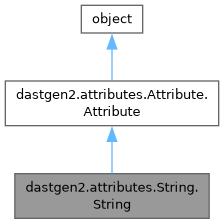
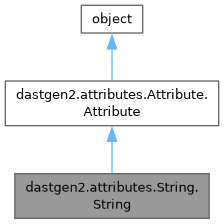
Wrapper around C++ string which is not a dataype supported by MPI natively. More...
Public Member Functions | |
| __init__ (self, name, max_length=80, ifdefs=[], qualifier=Attribute.Qualifier.NONE, initval=None) | |
| get_methods (self, _full_qualified_class_name, for_declaration=True) | |
| Return sequence of methods that are defined for this attribute. | |
| get_plain_C_attributes (self, for_constructor=False) | |
| Return list of n-tuples. | |
| get_setter_getter_name (self) | |
| get_method_body (self, signature) | |
| I hand in the method signature (see get_methods()) and wanna get the whole implementation. | |
| get_native_MPI_type (self) | |
| Return native (built-in) MPI datatype. | |
| get_to_string (self) | |
| Return string representation of attribute. | |
| Public Member Functions inherited from dastgen2.attributes.Attribute.Attribute | |
| __init__ (self, name, ifdefs=[], qualifier=Qualifier.NONE, initval=None, expose_in_header_file=False) | |
| name: String This is a plain string which has to follow the C++ naming conventions, i.e. | |
| get_public_fields (self) | |
| Return string that is to be embedded into the public part of the class definition. | |
| use_default_copy_constructor (self) | |
| If this routine returns False, the generator will create a copy constructor copying each attribute over via a setter/getter combination. | |
| get_constructor_arguments (self) | |
| Return list of tuple of arguments for the constructor. | |
| get_first_plain_C_attribute (self) | |
| For MPI for example, I need to know the first attribute. | |
| get_attribute_declaration_string (self) | |
| Construct the string used for variable declaration using the output of get_plain_C_attributes(self). | |
| get_accessor_name (self) | |
| Generate the accessor name used throughout dastgen2 to create variables, function names, etc. | |
| name (self) | |
| I expect that there's at least one setter/getter pair. | |
| get_includes (self) | |
Protected Attributes | |
| _max_length = max_length | |
| Protected Attributes inherited from dastgen2.attributes.Attribute.Attribute | |
| _name = name | |
| _initval = initval | |
Additional Inherited Members | |
| Data Fields inherited from dastgen2.attributes.Attribute.Attribute | |
| bool | use_data_store = False |
| ifdefs = ifdefs | |
| qualifier = qualifier | |
| expose_in_header_file = expose_in_header_file | |
| Protected Member Functions inherited from dastgen2.attributes.Attribute.Attribute | |
| _is_static (self) | |
| _is_const_static (self) | |
| _is_const (self) | |
| _is_constexpr (self) | |
Wrapper around C++ string which is not a dataype supported by MPI natively.
max_length Maximum length of the strings that can be handled. The shorter you keep this value, the smaller the MPI message size, as we don't use dynamic data structures. We always map the C++ string onto an array with max_length entries.
| dastgen2.attributes.String.String.__init__ | ( | self, | |
| name, | |||
| max_length = 80, | |||
| ifdefs = [], | |||
| qualifier = Attribute.Qualifier.NONE, | |||
| initval = None ) |
| dastgen2.attributes.String.String.get_method_body | ( | self, | |
| signature ) |
I hand in the method signature (see get_methods()) and wanna get the whole implementation.
Reimplemented from dastgen2.attributes.Attribute.Attribute.
Definition at line 168 of file String.py.
References dastgen2.attributes.Attribute.Attribute._name.
| dastgen2.attributes.String.String.get_methods | ( | self, | |
| _full_qualified_class_name, | |||
| for_declaration = True ) |
Return sequence of methods that are defined for this attribute.
Each entry is a tuple. Its first entry is the signature of the function (not including the semicolon), the second entry is the return type.
for_declaration: Boolean if True, assume we want method names for function declaration, not definition. Some generators might - for example - add additional annotations for the declaration such as Clang attributes. The most frequently used use case for this flag is the static annotation. To make a function a class function, you have to declare it as static. But the definition does not allow you to repeat that static keyword again.
Reimplemented from dastgen2.attributes.Attribute.Attribute.
Definition at line 57 of file String.py.
References dastgen2.attributes.Attribute.Attribute.get_accessor_name().

| dastgen2.attributes.String.String.get_native_MPI_type | ( | self | ) |
Return native (built-in) MPI datatype.
Return None if there's no direct mapping. The actual result is not a string only, but a list of tuples from native type to cardinality.
Reimplemented from dastgen2.attributes.Attribute.Attribute.
Definition at line 201 of file String.py.
References _max_length.
| dastgen2.attributes.String.String.get_plain_C_attributes | ( | self, | |
| for_constructor = False ) |
Return list of n-tuples.
The tuple can either host two, three or four entries. The list itself may contain arbitrary many tuples, as one attribute logically can map onto multiple technical attributes. For example, when declaring an array, also declare an integer variable containing its length.
for_constructor: bool whether the return value of this function is intended for use in the constructor method of the DataModel. If true, will omit (optionally provided) initialization values in the attribute string.
The first triple entry always is the name, the second one the type. Type has to be plain C.
The first triple entry always is the name, the second one the type. Type has to be plain C. The third entry is a C++ attribute, i.e. a string embedded into [[...]].
The first triple entry always is the name, the second one the type. Type has to be plain C. The third entry is a C++ attribute, i.e. a string embedded into [[...]]. The fourth attribute is a list of ifdef symbols that have to be defined to use this attribute. The list of symbols is concatenated with an and. You can return an empty list. All symbol definitions can also be expressions such sa DEBUG>0 or defined(DEBUG).
Please note that these latter ifdefs are something completely different than the base class ifdefs. The base class ifdefs are to be used if you want to switch attributes on and off. The attributes here are used to switch between realisation variants.
Arrays can be modelled by adding a cardinality ("[15]" for example) to the first triple entry, i.e. the name.
Reimplemented from dastgen2.attributes.Attribute.Attribute.
Definition at line 99 of file String.py.
References dastgen2.attributes.Attribute.Attribute._initval, dastgen2.attributes.Boolean.Boolean._is_const, dastgen2.attributes.Double.Double._is_const, dastgen2.attributes.DoublePointer.DoublePointer._is_const, dastgen2.attributes.Integer.Integer._is_const, _is_const, dastgen2.attributes.Boolean.Boolean._is_const_static, dastgen2.attributes.Double.Double._is_const_static, dastgen2.attributes.DoublePointer.DoublePointer._is_const_static, dastgen2.attributes.Integer.Integer._is_const_static, _is_const_static, dastgen2.attributes.Boolean.Boolean._is_constexpr, dastgen2.attributes.Double.Double._is_constexpr, dastgen2.attributes.DoublePointer.DoublePointer._is_constexpr, dastgen2.attributes.Integer.Integer._is_constexpr, _is_constexpr, dastgen2.attributes.Boolean.Boolean._is_static, dastgen2.attributes.Double.Double._is_static, dastgen2.attributes.DoublePointer.DoublePointer._is_static, dastgen2.attributes.Integer.Integer._is_static, _is_static, _max_length, and dastgen2.attributes.Attribute.Attribute._name.
| dastgen2.attributes.String.String.get_setter_getter_name | ( | self | ) |
Definition at line 165 of file String.py.
References dastgen2.attributes.Attribute.Attribute._name.
| dastgen2.attributes.String.String.get_to_string | ( | self | ) |
Return string representation of attribute.
Reimplemented from dastgen2.attributes.Attribute.Attribute.
Definition at line 204 of file String.py.
References dastgen2.attributes.Attribute.Attribute.get_accessor_name().

|
protected |
Definition at line 53 of file String.py.
Referenced by get_native_MPI_type(), and get_plain_C_attributes().
 1.15.0